Think back to the last big family meal. What actually stuck with you? Probably not the menu. More likely it was the chaos: a cousin pinching food off someone's plate, an uncle losing an argument he refused to drop, a toddler camped under the table.
All of it happened around one slab of wood and a handful of chairs. So when you start browsing a dining table store in Chennai, slow down a little. This isn't a throwaway purchase. It's where your household will celebrate, argue, do sums and eat dosa at seven in the morning for years to come.
The Table Does More Jobs Than Anyone Admits
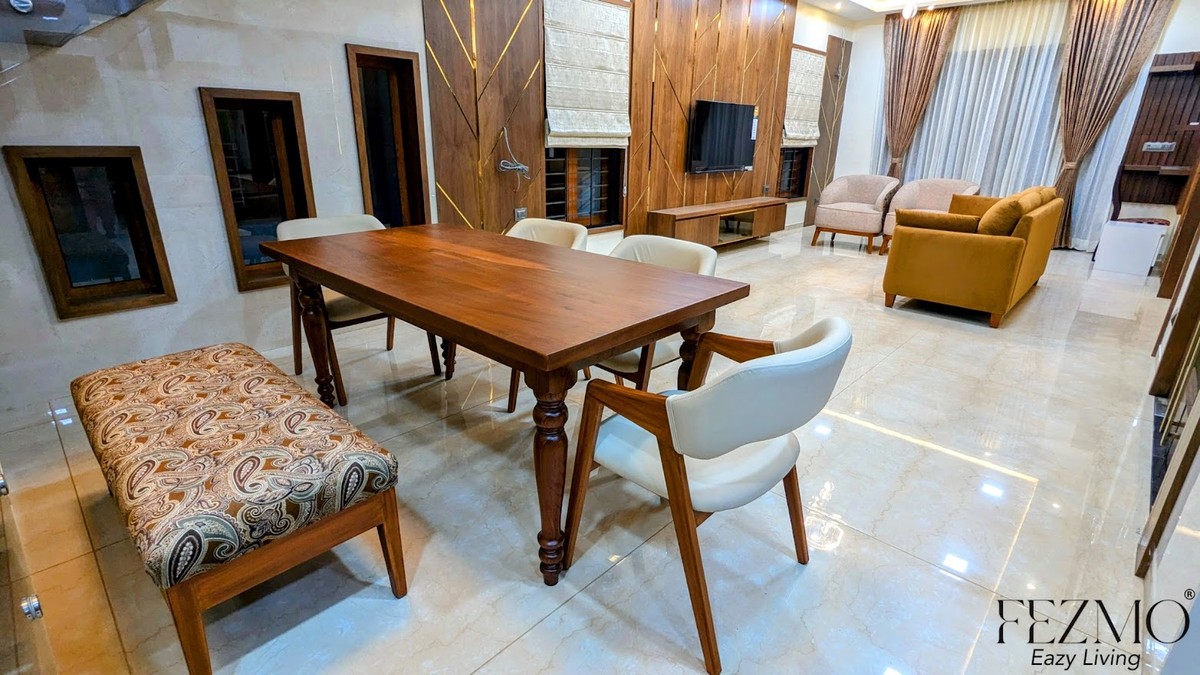
Count the roles in a single week. Breakfast bar. Homework desk. Landing spot for the shopping bags. Laptop corner when the sofa gets uncomfortable. Festival buffet on Sunday.
Very few things in a home are asked to change character that many times, and that's the real reason build quality matters more than the photo in a catalogue.
Why People Linger (or Don't)
A comfortable table keeps people seated. A wobbly or cramped one does the opposite: plates get cleared fast and everybody scatters to their phones. Nobody decides this out loud. The furniture quietly decides for them.
Measure First, Fall in Love Second

We've all seen it. Someone spots a gorgeous table, brings it home, and the dining room suddenly feels like a railway waiting hall. A tape measure fixes that, and it's free.
The Numbers Worth Knowing
Start with the space around the table. A common planning guideline is to leave around 90 cm (roughly 36 inches) between the table edge and the nearest wall or furniture, which lets chairs be pulled out and people sit comfortably. Where people need to walk behind seated diners, around 105 to 110 cm is more comfortable.
How Much Table Each Person Needs
Plan on around 60 cm (24 inches) of edge per person. By that maths, a 150 cm rectangular table is generally comfortable for four and can accommodate six with a tighter arrangement, depending on its width and leg design. If six is your everyday number, step up to 180 cm.
Knees, Aprons and Chair Height
Most standard dining tables stand between 72 and 76 cm tall, and chairs with a seat height of around 45 cm usually pair well with them. A vertical gap of roughly 25 to 30 cm between the chair seat and the tabletop is a useful starting point, although apron thickness and leg placement also affect knee comfort.
If you can, sit at the table before buying it. Thirty seconds will tell you more than a spec sheet.
Which Shape Suits Your Home?
Rectangular: The Safe Choice
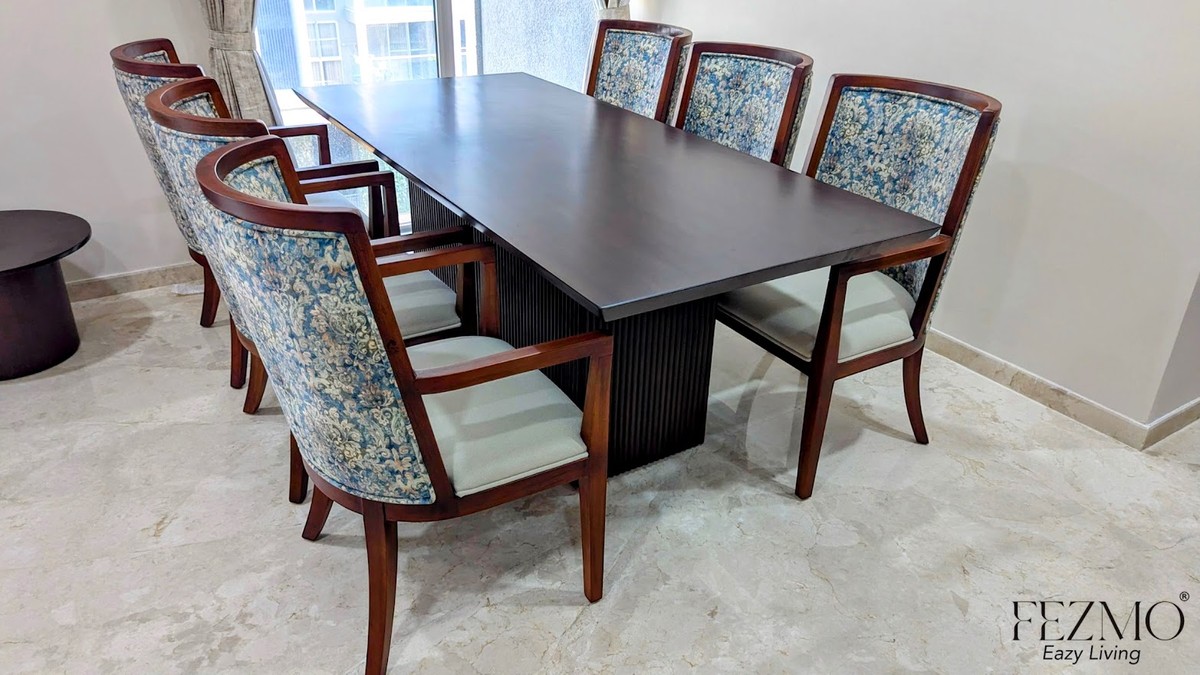
Good for long, narrow rooms and bigger families, with space for a bench along one side. Kids tend to love benches. So do guests who turn up without warning.
Round: The Talkative Choice
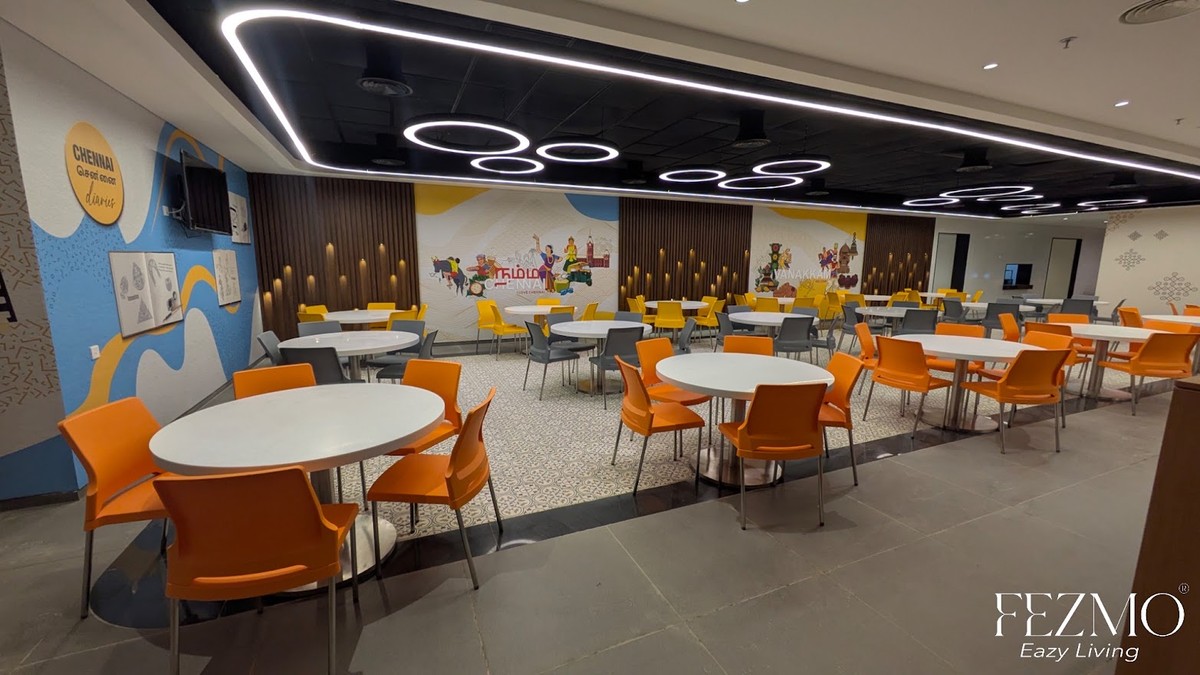
Nobody gets stuck at the far end, so conversation flows more easily. A diameter of around 120 cm works well for four, while around 150 cm can accommodate six depending on chair width and how much table space you want for serving. Round tops also rescue small, square dining corners.
Square and Extendable
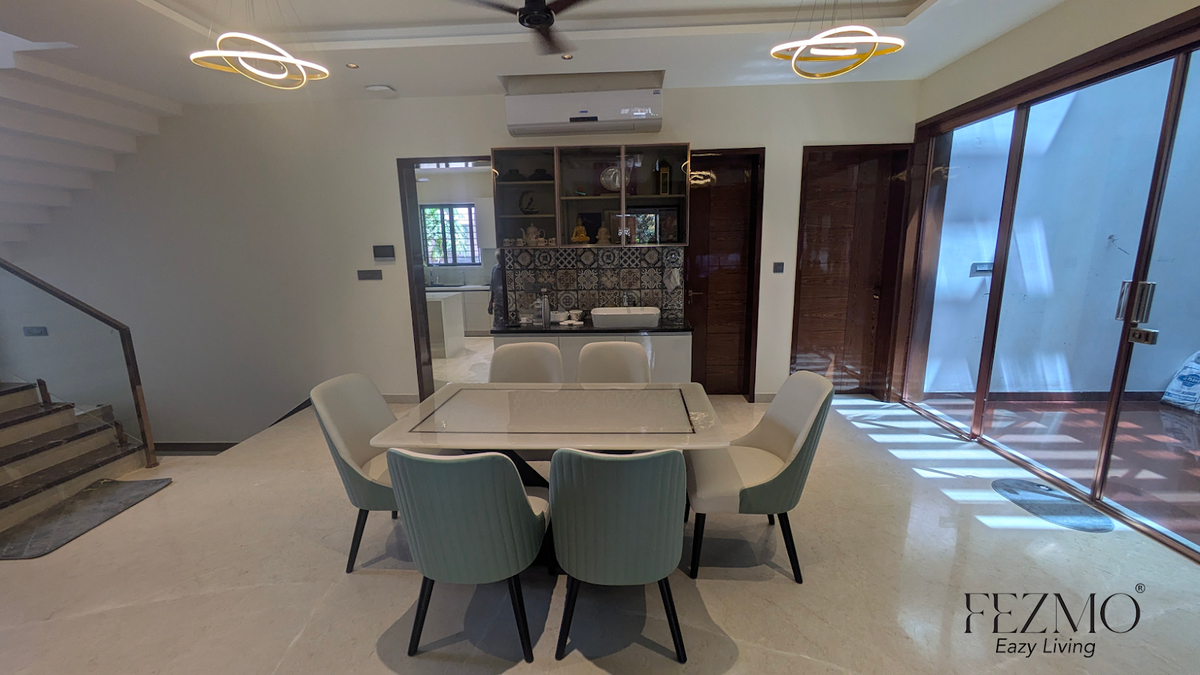
Couples and small flats do well with square tops. Host a lot but short on floor space? An extendable table stays modest on a quiet Tuesday and stretches for festival weekends.
How Many People Actually Fit?
- 120 cm round table: Seats 4 people
- 150 cm round table: Seats 4 to 6 people
- 120 cm rectangular table: Seats 4 people
- 150 cm rectangular table: Seats 4 to 6 people
- 180 cm rectangular table: Seats 6 people
- 200 to 240 cm rectangular table: Seats 6 to 8 or more people
Actual seating depends on table width, leg position, chair width and how much personal space diners need.
Chennai's Climate Changes the Furniture Conversation
Coastal. Warm. Sticky for much of the year. Wood doesn't ignore any of that. It takes in and gives off moisture as the seasons shift, so poorly manufactured or inadequately sealed wood-based boards can warp, swell or develop joint problems as conditions change. Choose the material with that in mind, not just the colour.
Solid Wood
Teak, sheesham, mango wood and rubberwood are all common in Indian homes, and they don't behave identically. Teak is known for natural oils that help it cope with moisture. Sheesham is dense, with a lovely grain. Rubberwood is often a more budget-friendly option and can take stains evenly when properly seasoned and finished.
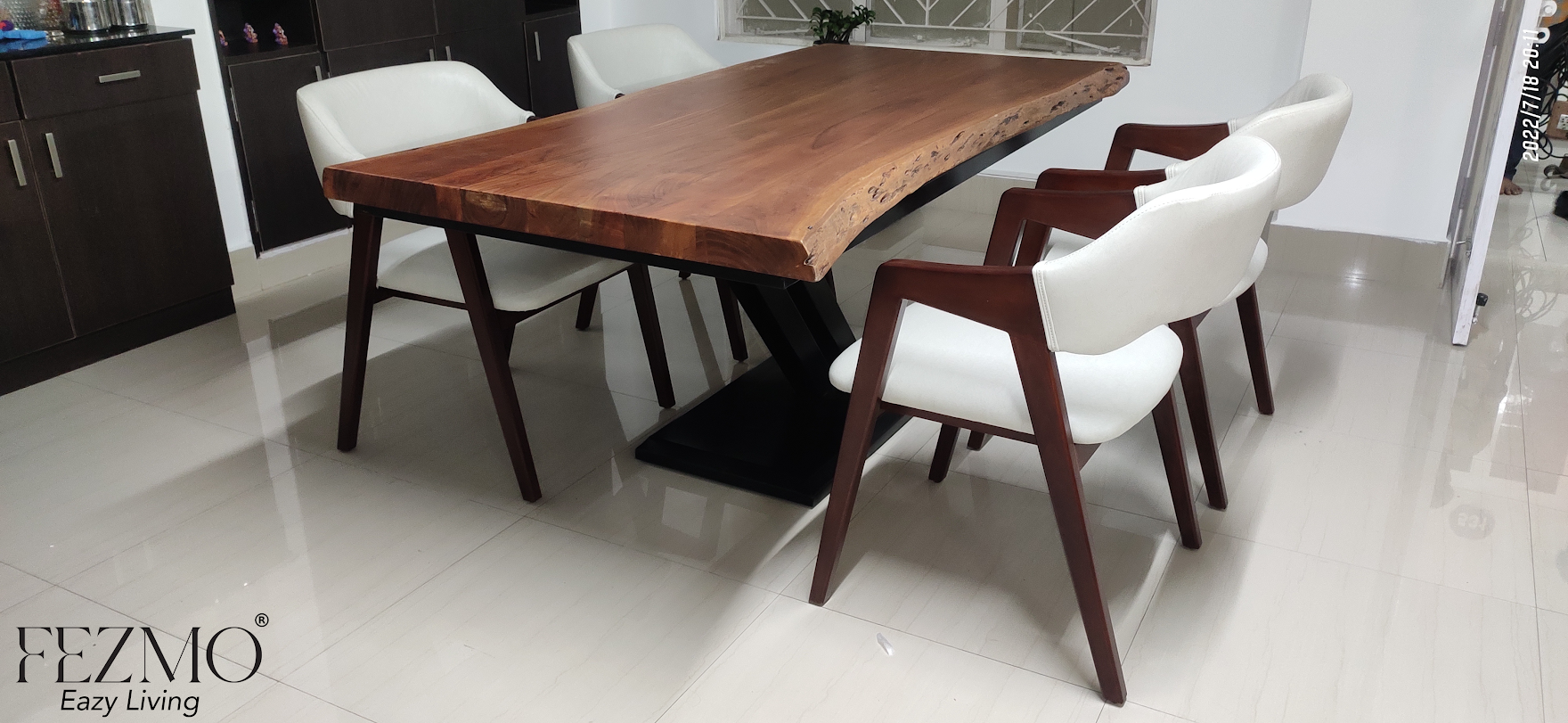
Shopping for solid wood furniture in Chennai? Ask three things: how the timber was dried, how the joints are made, and what finish protects the surface. Properly kiln-dried wood combined with well-designed joinery and appropriate adhesives generally gives a more durable build than relying on adhesive alone.
Cane
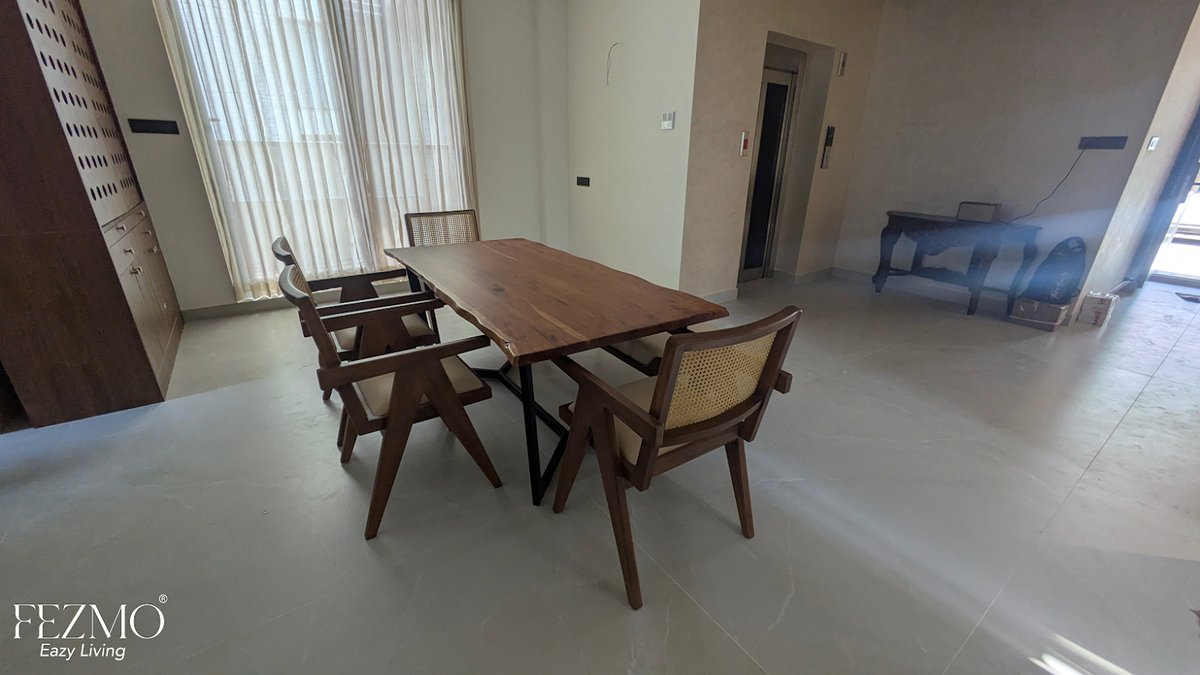
Cane suits warm interiors because its open weave allows air to circulate around the seat or back. On dining chairs this helps the seating stay comfortable during summer meals, though cushions and room conditions matter too. Pair cane-backed chairs with a wooden table and the whole set feels lighter without looking flimsy.
Glass, Stone and Engineered Tops
Glass and stone look crisp. They also show every fingerprint, and plates clatter on them. Many engineered tops with laminate finishes offer good stain resistance and can cost less than solid timber. Whether they can be repaired or refinished depends on the surface and construction, so ask what sits beneath the finish.
Finish and Care
A matte or satin polyurethane finish generally resists everyday spills better than a bare oil finish, though oil is easier to touch up. Whichever you choose, wipe spills quickly, put coasters and placemats under hot dishes, and keep the table out of strong direct sunlight, which can gradually change the colour of wood and finishes.
Chairs, Benches and That Handy Sideboard
A great table with chairs that hurt after twenty minutes is a missed opportunity. Dinners run longer than that.
Chairs
Look for a gently angled backrest, a seat depth of roughly 40 to 45 cm (depending on body size and chair design), and a surface that wipes clean easily. Upholstery adds comfort, but pick fabrics that forgive spills, especially with small children around.
Benches
A bench slides fully under the table, which saves floor space in tight rooms, and it seats one more person when relatives drop in unannounced. One bench on one side with chairs opposite gives a nice mix of casual and formal.
The Sideboard
A low sideboard keeps serving dishes, table linen and everyday cutlery within arm's reach. Bonus: it gives a lamp or a plant somewhere to live, which leaves the tabletop clear for the actual meal.
Light It Like You Want to Be There
Lighting changes how a meal feels more than most people expect. A pendant is often positioned around 75 to 90 cm above the tabletop, with the final height adjusted for the fixture, ceiling height and sight lines so it lights the table without blocking conversation.
Warm-white lighting often creates a more relaxed dining atmosphere, while a high colour rendering index (CRI) helps food, wood and skin tones look more natural. Earthy neutrals and soft greens sit nicely beside natural wood, and a rug can mark out the dining zone in an open-plan room. Just make sure it's big enough that the chair legs stay on it when pulled back.
When the Dining Table Turns Into a Desk
Plenty of households now work from the dining table. It's fine for a while, then it gets old fast. Chairs that support your back through long hours and a smooth, durable surface make it bearable.
Better still, look at workspace furniture in Chennai so the dining table can go back to being a dining table. Even a compact desk separates work stress from family time and keeps the meal space welcoming.
Before You Pay: A Short Checklist
Questions to Ask the Seller
What is the table made of? How is it joined? What finish does it carry? Find out its weight capacity, whether the legs can be tightened over time, and what warranty or after-sales service comes with it. And ask for real photos of the piece in a home, not just studio shots.
Where Buyers Slip Up
The usual suspects: a table that's too large, chairs that don't match the height, and no plan for getting it indoors. Door and lift widths, stairwells, corridor turns, the building entrance and the packaged dimensions all matter, because large tables often fail at delivery rather than at purchase.
Another common slip is trusting photographs alone. Colour and grain look different under showroom lights than in your own room, so see a sample or visit in person if you can.
Keeping the Budget Sensible
If the dining area is used every day, prioritising the table and chairs over easily replaceable decorative accessories can be a sensible way to allocate the budget. A well-made table can serve a family for many years, while a flimsy one often needs replacing sooner, which costs more in the long run.
Conclusion
A good dining table earns its spot by being comfortable, practical and ready for anything, from a quiet breakfast to a loud festival lunch. Measure your space, pick materials that suit a coastal climate, and choose chairs and lighting for the way your household really lives.
When you're ready to furnish the rest of the house with the same care, browse the wider range of home furnishings in Chennai so every room feels like it belongs together. Contact us to know more.
Frequently Asked Questions
What size dining table suits a family of four?
A rectangular table around 120 to 150 cm long can work well for four, as can a round table near 120 cm in diameter, provided the width, leg placement and surrounding clearance (about 90 cm) are suitable.
Which wood is best for a dining table in a humid climate?
Well-seasoned teak, sheesham and mango wood are among the options commonly used in Indian homes. What matters even more is proper drying, quality joinery and a protective finish, so ask the seller about all three.
Is a round or rectangular table better for a small room?
Round tables often work better in compact, square spaces because they have no sharp corners and allow smoother movement. Rectangular tables are better for long, narrow rooms.
How tall should a dining table be?
Most standard tables are between 72 and 76 cm tall. Pair them with chairs that have a seat height of about 45 cm for comfortable knee room.
How do I protect a wooden table from stains and heat?
Use placemats and coasters, wipe spills quickly, and avoid putting very hot dishes straight onto the surface. Keep it out of strong direct sunlight to prevent fading.
Can cane chairs go with a solid wood dining table?
Yes. Cane lets air flow through the seat and back, which suits warm weather, and its texture contrasts nicely with the smooth grain of a wooden tabletop.
How many people can sit at a 180 cm table?
A 180 cm rectangular table usually seats six comfortably. Eight may be possible with narrower chairs or a bench and a tighter arrangement, depending on the table's width and leg placement.